

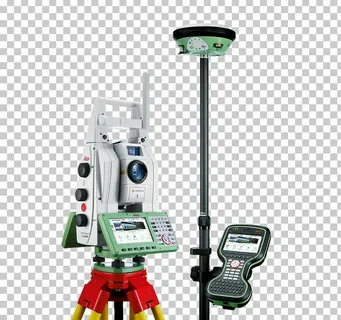
The Role of GNSS in Scientific Research and Earth Monitoring
Global Navigation Satellite Systems (GNSS) are increasingly becoming indispensable tools in scientific research and Earth monitoring. With their ability to provide precise location data, GNSS technologies have transformed a wide range of disciplines, including geophysics, meteorology, environmental monitoring, and disaster management. This article explores the crucial role that gnss positioning system plays in advancing scientific research and enhancing Earth observation.
What is GNSS?
GNSS refers to a network of satellites that provide global positioning data to users on or near the Earth’s surface. The most well-known GNSS systems include the U.S. Global Positioning System (GPS), Russia’s GLONASS, Europe’s Galileo, and China’s BeiDou. These systems work by sending signals from satellites to receivers on Earth, allowing for accurate positioning, navigation, and timing.
GNSS Technologies: More Than Just Navigation
While GNSS is commonly associated with navigation and mapping, its applications go far beyond these uses. The high accuracy of GNSS measurements—often down to millimeters—makes it an invaluable tool for scientific research and Earth monitoring.
The Role of GNSS in Scientific Research
GNSS plays a key role in several areas of scientific inquiry, offering researchers precise geospatial data that is vital for understanding Earth’s processes.
1. Geodesy and Earth Sciences
In the field of geodesy, GNSS is crucial for measuring the Earth’s shape, movement, and gravitational field. By observing how GNSS signals travel through the atmosphere, scientists can track changes in the Earth’s crust, tectonic plate movements, and land deformation caused by natural events like earthquakes or volcanic activity.
2. Climate and Environmental Studies
GNSS data is used to monitor environmental changes, particularly in the study of sea level rise and the impact of climate change on coastal regions. By continuously measuring the position of coastal landmarks and comparing them over time, scientists can detect even small shifts in the Earth’s surface. This is particularly important for understanding how rising sea levels might affect vulnerable communities and ecosystems.
3. Weather Forecasting and Atmospheric Research
GNSS also contributes to weather forecasting and atmospheric research. Signals transmitted by GNSS satellites can be affected by atmospheric conditions, including moisture levels. By analyzing these signal distortions, scientists can derive valuable information about atmospheric water vapor, which is essential for improving weather prediction models and understanding climate variability.
GNSS in Earth Monitoring
The ability to track and monitor the Earth in real-time is one of the most powerful applications of GNSS. In combination with other remote sensing technologies, GNSS enables comprehensive Earth observation capabilities.
1. Natural Disaster Monitoring and Management
GNSS plays a critical role in disaster management, especially in the context of earthquakes, landslides, and tsunamis. The real-time positioning data from GNSS receivers can provide immediate information about the movement of tectonic plates or ground displacement. This allows scientists and authorities to monitor seismic events as they occur, assess damage, and issue timely warnings.
2. Land and Infrastructure Monitoring
Urban planning and infrastructure maintenance benefit from GNSS-based Earth monitoring. Continuous GNSS observations are used to monitor the stability of critical structures, including bridges, dams, and skyscrapers. This helps engineers and city planners identify early signs of structural strain or movement, allowing for proactive maintenance and risk mitigation.
3. Agricultural and Land Use Studies
In agriculture, GNSS is essential for precision farming, which maximizes crop yields while minimizing environmental impact. By using GNSS-equipped machinery, farmers can monitor soil conditions, irrigation systems, and crop health with unprecedented accuracy. Additionally, GNSS data is used in land-use planning and land-cover classification, helping scientists understand land degradation, deforestation, and urban sprawl.
Conclusion
The role of GNSS in scientific research and Earth monitoring cannot be overstated. By providing precise and reliable positioning data, GNSS technology has transformed fields ranging from geodesy to environmental science and disaster management. As GNSS systems continue to improve and become more integrated with other Earth observation technologies, their potential to aid scientific discovery and support global monitoring efforts will only grow. Whether tracking tectonic shifts or monitoring climate change, GNSS remains a cornerstone of modern Earth science.
